Your role as an assistant
Defining the role of a classroom assistant is not necessarily straightforward. You will have many housekeeping and clerical duties, such as sweeping, stocking, making copies, record-keeping, and the like. You will also be tasked with monitoring the safety of children in your care, and, indeed, helping to educate them academically and socially. But, perhaps most importantly, how you perform all of your duties—how you carry materials, the tone and volume of your voice, your consistency in your approach to situations—affect the classroom environment. You are a model for the children in everything you do.
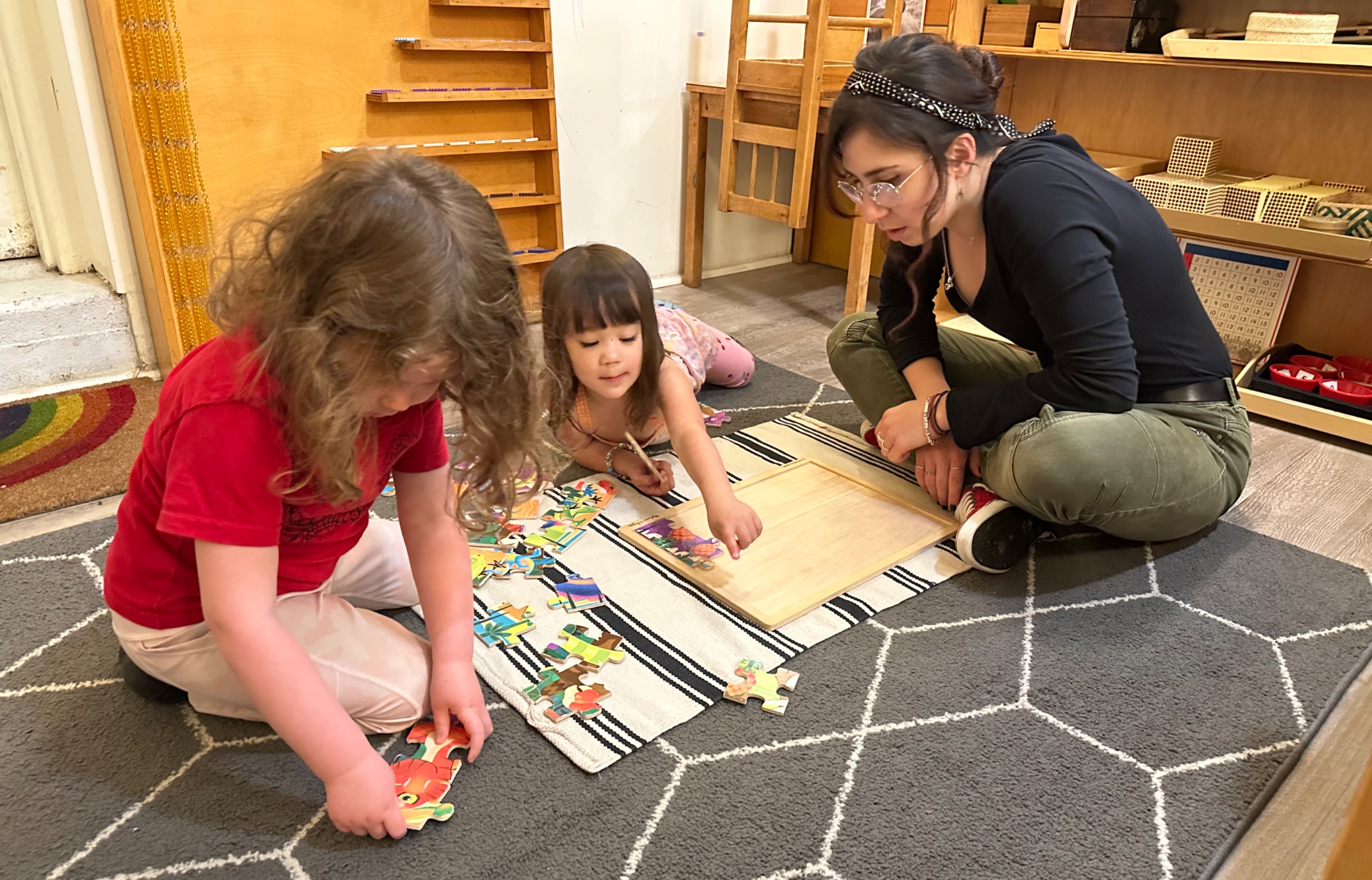
One of my favorite examples, from my own experience, of how we, as models, affect the children's behavior, is this: A child was having difficulty with another child who was bothering him. I must have been in a somewhat frazzled mood myself, because I said to him, "You can say, 'C'mon, man, don't do that anymore!'". He immediately turned to his friend and said, in earnest, "C'mon, man, don't do that anymore!". My intent was for him to be able to boldly tell his friend that he wanted the undesired behavior to stop—his friend would know by the measured tone and force of his voice that what was happening was unacceptable. But perhaps "C'mon, man" wasn't really the best phrase for him to use—though it did cause me to laugh to myself (and at myself as well). It was an everyday idiom that I used in my own life—how I might talk to a friend. But the child trusted that I was giving him an example that he could use that was effective and correct, because he knew that that had been my role for him, and for other children, many times before. Therefore, he repeated to his friend exactly what I'd said. This example shows how powerful, and simple, modeling can be.
Similarly, if I teach a child how to hold a tray with two hands, or carry only one item at a time, or use a certain spill cloth for wiping the table, I have to adhere to these same rules in my own behavior as well. A tray held with one hand will be hard to keep level, and items on it will slide off and break on the floor; carrying too many items at once might also cause me to drop and damage the items; and wiping spilled milk using my napkin means my napkin is no longer usable, or that I've spread my germs across the table. If I don't want children to yell across the classroom, I will model how to walk over and talk softly to the guide, if the guide is available and not giving a lesson. If I don't want the children to interrupt me when I am focused on a task, I won't interrupt them when they are focused on their work. Every act I take throughout the day is being observed, and absorbed, by the child.
One of your first steps as an educator will also be to build a rapport with the students you work with. Your consistency, kindness, respect, even sense of humor, along with many other traits, will allow them to know that you are there for them, but also that you are there to hold them accountable.
There is a lot to learn as an assistant, so please ask us questions! Your guide or other assistants are a great resource. How to act and what to say can vary greatly, depending on the child you are working with—in fact, how you approach an issue with one child might be the complete opposite of how you approach it with another. And the children will notice this difference, and will wonder why it exists. I find that, in any situation, being completely honest as to my reasoning is the most effective: "You aren't able to work with him right now because your body is out of control, and it is distracting the whole classroom when the two of you are working together. Here are some strategies to help calm your body—after that, maybe you can try working with him again."
I have found that learning how to be an effective assistant is an on-going process.